Why certification matters in paper and packaging
Paper and packaging made from wood fibre carries an environmental narrative that begins in the forest. Certification schemes exist to verify claims made at each step of the supply chain — that fibre came from a forest managed according to defined criteria, that it was processed and traded with appropriate documentation, and that the end product meets stated environmental performance thresholds.
The schemes discussed here address different points in that chain and use different verification methodologies. Selecting the appropriate certification — or combination of certifications — depends on where in the supply chain a company operates, what claims it wants to make, and which markets or customers require verification.
Forest Stewardship Council (FSC)
FSC was established in 1993 following the 1992 Rio Earth Summit. Its headquarters are in Bonn. The scheme covers two types of certification: forest management (FM) certification, applied at the forest level, and chain-of-custody (CoC) certification, applied at each processing and trading step between forest and end consumer.
Forest management certification
FSC forest management certification is awarded against the FSC Principles and Criteria — a framework covering environmental, social, and economic dimensions of forest management. National FSC working groups develop forest stewardship standards tailored to local forest types and legislation. In Sweden, Finland, and Germany — the three largest paper-producing forest nations in Europe — national FSC standards are in force and certified forest area is substantial.
Chain-of-custody certification
CoC certification (governed by FSC-STD-40-004) applies to any organisation in the supply chain that takes physical custody of FSC-certified material: sawmills, pulp mills, paper mills, converters, printers, and distributors. Certified organisations must maintain records of input and output volumes, segregate certified and non-certified material or apply controlled wood and percentage-based approaches, and undergo annual audits by FSC-accredited certification bodies.
On-pack claims
FSC permits three types of on-pack claim, each requiring a specific input mix:
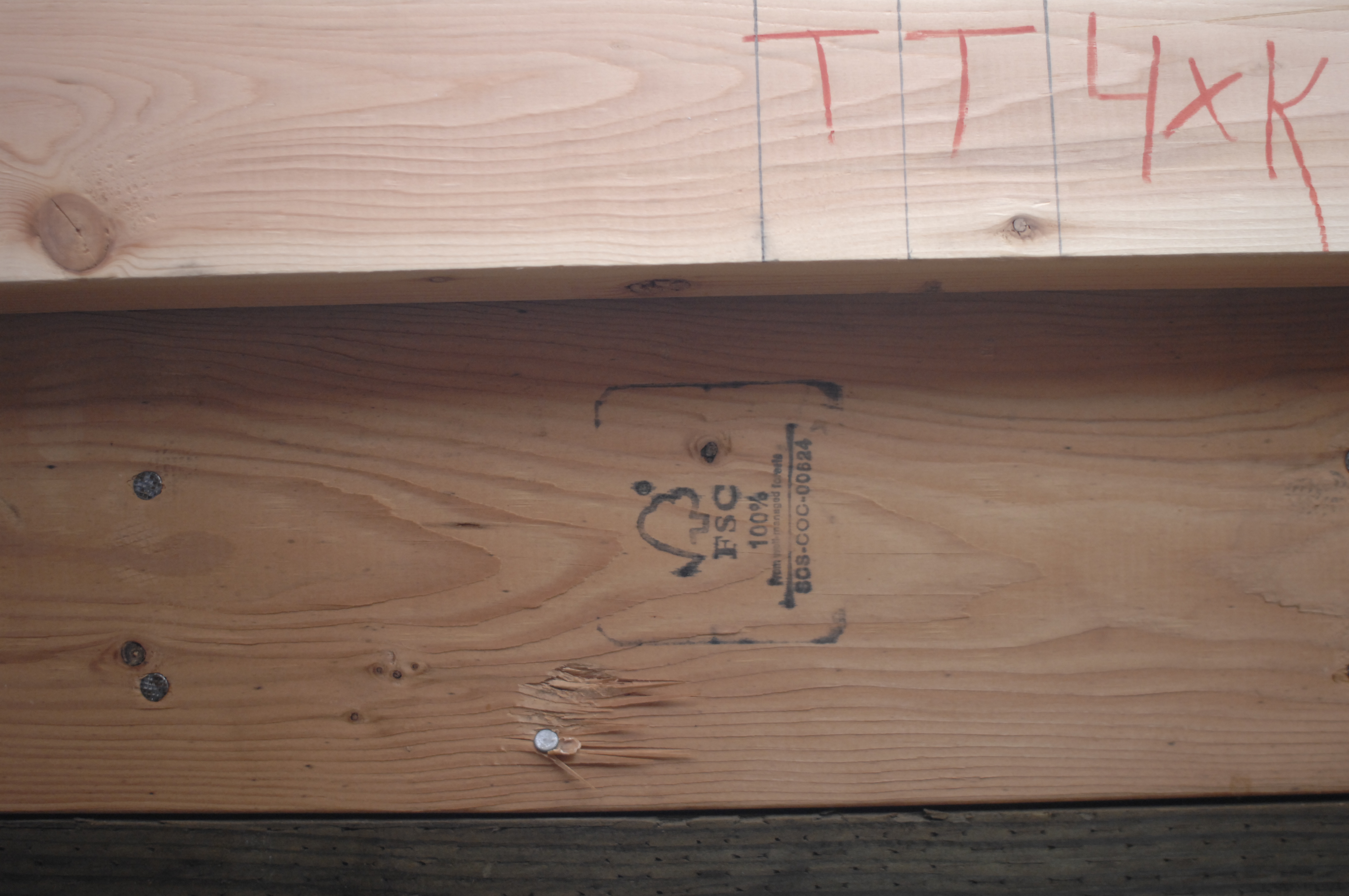
- FSC 100% — all wood-based inputs come from FSC-certified forests
- FSC Recycled — all wood-based inputs are post-consumer or pre-consumer reclaimed material verified according to FSC rules
- FSC Mix — a combination of certified virgin and/or controlled wood and/or recycled material meeting defined thresholds
Use of the FSC trademark on packaging requires a licence agreement with FSC International and must comply with FSC-STD-50-001 (Trademark Use Standards). Claims must be substantiated by CoC certificate coverage throughout the supply chain.
Programme for the Endorsement of Forest Certification (PEFC)
PEFC was established in 1999 as an umbrella body that endorses national and regional forest certification systems. Rather than writing a single global standard, PEFC assesses whether national schemes meet a set of international requirements and endorses those that do. In Europe, endorsed national schemes include PEFC Sweden, PEFC Finland, PEFC Germany, and PEFC France, among others.
Differences from FSC
The fundamental operational structure is similar — forest management certification at the forest level, CoC certification at each supply chain step. Key differences include:
- PEFC allows group forest management certification, which is relevant for small private forest owners who individually lack the scale to maintain individual FSC certificates
- PEFC's CoC standard (PEFC ST 2002) has somewhat different controlled and reclaimed material provisions compared to FSC
- Mutual recognition: PEFC and FSC do not cross-certify, but PEFC endorses national schemes that in turn recognise other PEFC-endorsed schemes
In terms of certified forest area and CoC certificate numbers in Europe, FSC and PEFC are broadly comparable, with some countries skewing strongly toward one scheme.
EU Ecolabel for tissue paper
The EU Ecolabel (the "Flower" logo) is a voluntary scheme governed by Regulation (EC) 66/2010. Product-specific criteria are set by the European Commission following consultation. For tissue paper — including toilet paper, kitchen towels, and facial tissue — criteria address:
- Energy consumption per tonne of paper produced
- Air and water emissions from production
- Restrictions on hazardous chemicals used in production or as product ingredients
- Fibre sourcing requirements (accepting FSC, PEFC, or equivalent certification)
EU Ecolabel criteria are periodically revised. Licence holders must reapply when criteria change. The scheme applies to tissue products rather than to all paper and packaging grades.
Cradle to Cradle (C2C)
Cradle to Cradle certification, administered by the Cradle to Cradle Products Innovation Institute, takes a broader product life-cycle approach than fibre-origin schemes. It assesses five categories: material health, material reutilisation, renewable energy and carbon management, water stewardship, and social fairness. Each category is scored separately, and the overall certification level (Bronze, Silver, Gold, or Platinum) is determined by the lowest category score.
For paper and board products, C2C certification requires that the materials in the product are characterised for hazardous substances and that the product is designed to remain in a technical or biological material cycle. A paper that is recyclable under standard mill conditions and free of hazardous process chemicals can qualify.
C2C is less widely adopted in European paper packaging than FSC or PEFC, but is used by some manufacturers of specialty packaging targeting premium consumer goods markets.
Interaction between schemes
Brand owners often require more than one form of certification. A corrugated board manufacturer might hold PEFC CoC and EU Ecolabel (if producing tissue) and demonstrate EN 13432 compostability compliance. These schemes do not conflict — they address different aspects of the product — but managing multiple certifications requires dedicated administration and audit preparation.
FSC and PEFC are the most widely specified certification requirements in European procurement specifications for paper packaging. EU Ecolabel and C2C are more common in consumer-facing product categories.
Greenwashing risk and substantiation
The EU Green Claims Directive, under development as of 2026, will require that environmental claims made on products and in marketing be substantiated and independently verified before use. For certification claims, this largely means ensuring that the claim accurately reflects the scope of the certificate held — for example, a "made with FSC-certified paper" claim on a multi-component product must be supported by a CoC certificate covering the paper component specifically, not a different part of the packaging construction.
See the article on EU production standards for the regulatory context in which these claims operate.